We all merely want to know how to operate a vehicle, but passing your first road test in Ontario is something beyond it. The driving instructors also expect responsible, consistent, and safe driving behavior from the learners. You can make yourself more confident by developing good driving habits before the day of the test. Regular practice is beneficial either when you’re getting ready for a G2 or the next stage of the licensing process in Ontario.
Keep Checking Mirrors on a Regular Basis
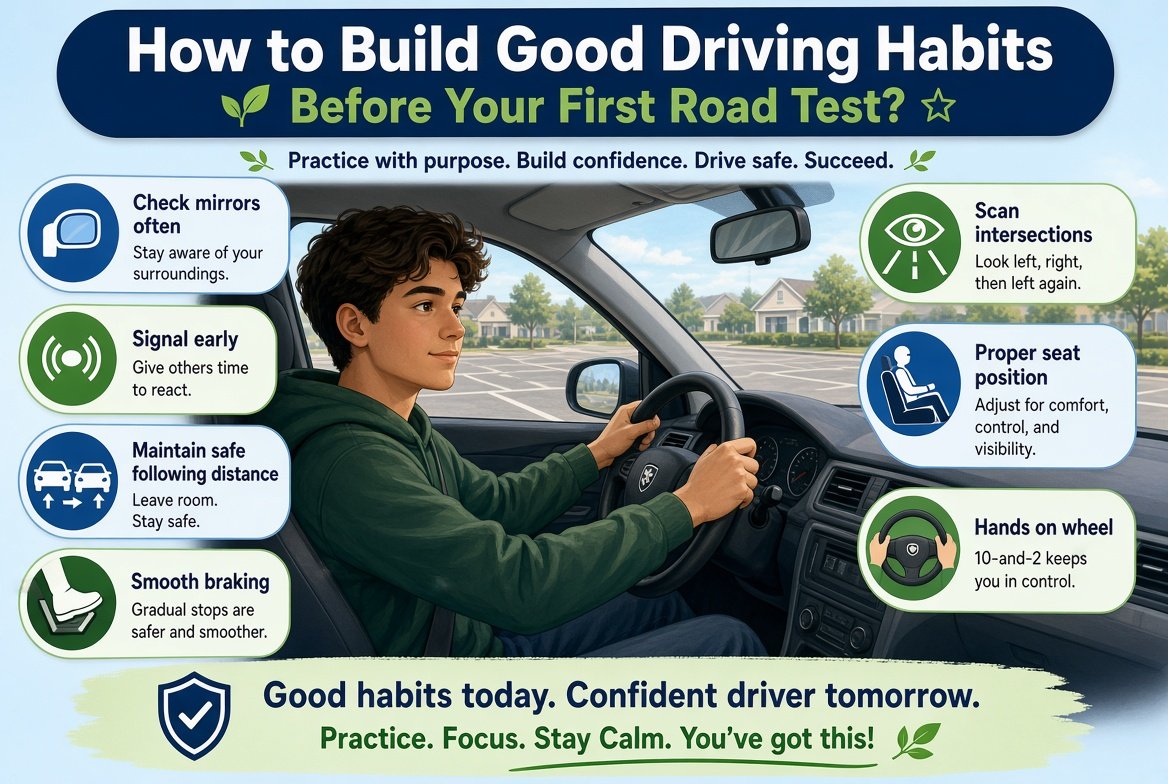
One of the unavoidable driving habits before road test day is checking mirrors consistently. If you want to change lanes, turn, speed, or stop, you must get into the habit of checking side mirrors and the rearview regularly. Stop staring at the mirror for longer because it just requires a quick view, while focusing on the front side is more important for sure.
Consistent and Early Signaling
There must be automatic signaling. When you move towards the roadside, use your turn signal before moving, changing lanes and turning. It will still be required to check if the movement is safe or not. One of the easiest Ontario road test tips for beginners is to practice proper signaling during every drive.
Practice Acceleration and Smooth Braking
Something that may demonstrate poor vehicle control and turn driving uncomfortable is aggressive acceleration and sudden braking. Do practice accelerator pressing while moving away from the stop and applying brakes smoothly. It’s better to aim for predictable and controlled movements during normal driving, but you still need to brake firmly.
Maintain a Safe Following Distance
In case of traffic stopping or slowing unprecedentedly, a proper following distance provides more time to react. It’s an unmissable part of safe driving habits in Ontario, specifically during changing conditions of weather and busy traffic.
Develop Good Lane Positioning
Avoid drifting and stay fully positioned within your lane. Give a check to mirrors, signal, perform the shoulder check, and go for moving if there’s a secured gap before making a lane change. Mirrors don’t make every area space visible behind or beside your vehicle, as shoulder checks are specifically important.
Do the speed control.
Don’t just watch the speedometer but follow the speed limit as well. Adjust the speed as per weather conditions, pedestrians, intersections, curves, road conditions, and traffic. Also, don’t drive too fast or too slow consider it one of the useful driving test tips for beginners.
Pay Attention to Cyclists and Pedestrians
Keep scanning the surroundings and focus on residential streets, parking lots, bike lanes, school areas, intersections, and near crosswalks.
Combine Professional Lessons with Practice
Professional instruction can really help identify the things you’re doing wrong that you may not even notice when you are learning to drive. A good instructor will show you the right way to do things and explain the Ontario road rules, which can be a minefield on their own. They give you a real sense of what to expect on road test preparation in Ontario.
Between lessons, you’ll want to get out on the road for some supervised practice. This should be more than just pottering around without a plan set some goals for yourself each time out and focus on one or two specific skills like lane changes, turns, parking, checking your mirrors, and adjusting your speed. You can even break it down into smaller bits like right turns, left turns, or reversing into a parking spot if that helps.
Ignore Common Road Test Mistakes in Ontario
There are loads of reasons why learners might fail their road test in Ontario. It is because they get nervous and forget to do the things they normally do perfectly. It’s astonishing how many people forget to signal or check their mirrors, as this can all go horribly wrong quickly. Then, there are problems like poor observation, rolling stops, and driving in the wrong lane.
But here’s the thing the way to pass your driving test is not by just hoping for the best on the day. It’s about making driving safe and second nature through continuous practice. If you build good habits from the get-go, you’ll be able to make good decisions on the road without even thinking about it.
And remember, passing is just the beginning. Building solid yet good driving habits is all about becoming a confident and responsible driver. And that’s a skill you can use for the rest of your life, long after the road test is just a distant memory.