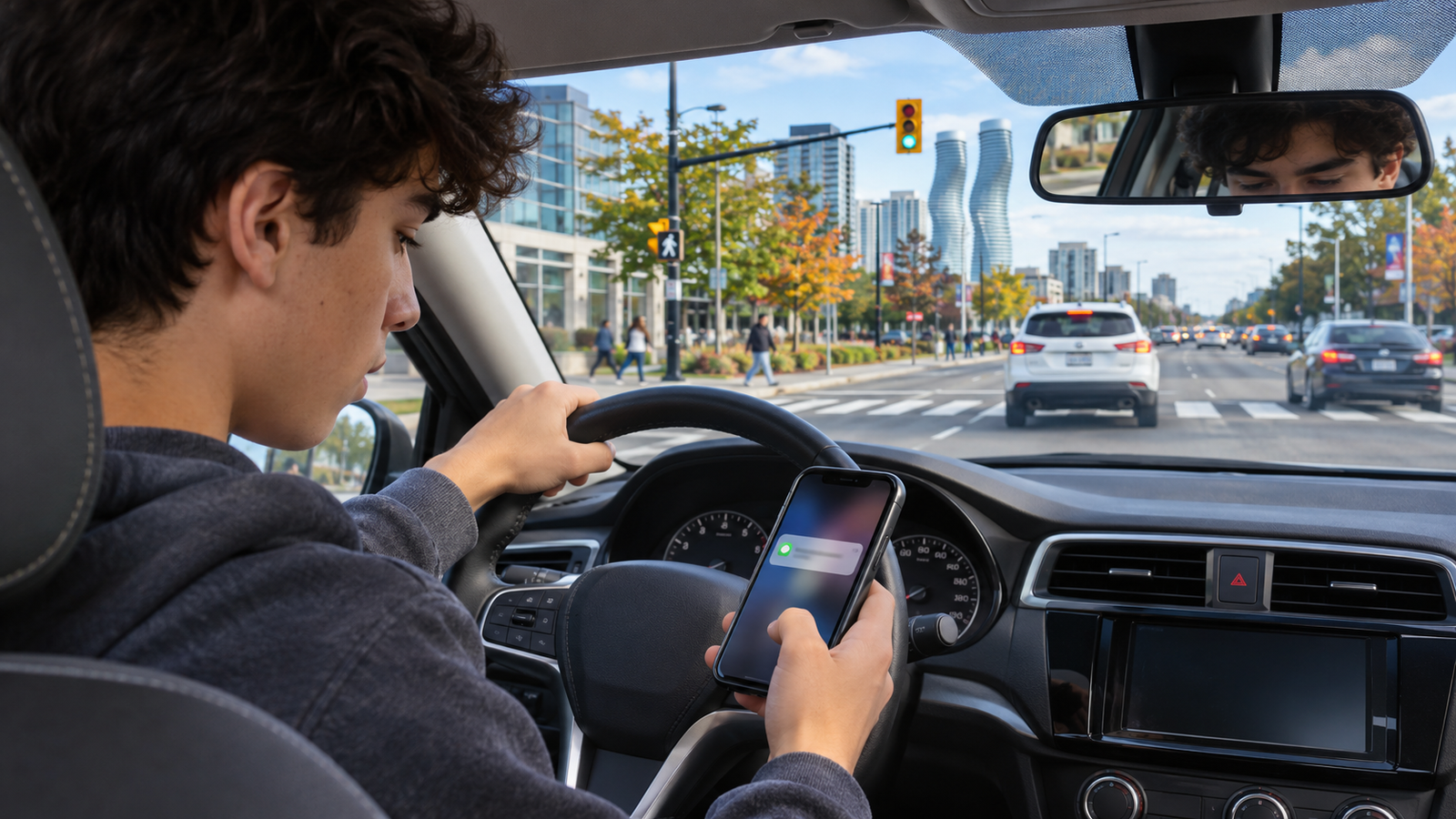
Distracted driving is a big road safety issue in Mississauga, Ontario, especially for new drivers. Texting, playing with the GPS or chatting with passengers may seem harmless enough, but all these activities pull your focus away from the road and make you more likely to crash.
New drivers find busy junctions, pedestrian crossings and changing traffic conditions difficult. A little distraction can mean a driver doesn’t see a sudden stop or an oncoming pedestrian.
Educating new drivers on how to stay away from common distractions while driving can improve safety and responsibility.
Defining Distracted Driving
Driver distraction occurs when a driver’s attention is diverted away from safe driving. There are four types of distractions:
- Visual distractions: looking at a phone, billboard or passenger instead of the road.
- Manual distractions include eating, drinking or grabbing something that takes your hands off the wheel.
- Instead of driving, think of talks, personal issues or other things.
- Talk or noise distractions.
Some activities have a lot of distractions. Texting is a unique risky behavior in that it calls for visual, manual and cognitive attention.
Understand common distracted driving behaviors that put new drivers in danger.
1. Checking Texts and Social Media
Mobile phones are a big distraction behind the wheel. New drivers might be tempted to look at notifications, texts or social media.
A glance at the phone, no matter how short, is not watching the road. Ontario has laws against reading traffic signal messages on hand-held devices.
Drivers should turn off notifications and keep phones out of sight until they have parked to ensure safety.
2. Refresh GPS and Navigation Apps
Navigation apps help you find your way through Mississauga’s unfamiliar neighborhoods. Entering destinations or changing routes while driving may distract from traffic.
Drivers looking at a GPS device risk missing road signs and pedestrians.
New drivers should enter destinations and use secure navigation systems with voice guiding before leaving.
3. Chat with friends and passengers
Young drivers talking with friends in the car can be distracted while driving.
Loud conversations, jokes, conflicts and passenger pressure may affect decision making. Young drivers need to be especially careful at intersections, changing lanes and unexpected hazards.
Passengers should know that the driver is a road safety minded person. In traffic, especially in stressful situations, keep your cool in conversation.
4. Eating and drinking in a vehicle
Though it’s handy, eating or drinking while driving requires you to take your hand off the wheel.
You can drop food, drop your drink or open packaging and accidents can happen in the car.
Ontario’s distracted driving laws don’t specifically ban eating and drinking, but the risky act can still lead to careless driving charges.
Better to pause a bit than try to deal with food and traffic all at once.
5. Tuning the music and vehicle controls
Song searches, playlist switches and air conditioner settings can all take drivers’ attention away.
A few small changes can confuse new drivers when they are approaching traffic and crossroads.
It helps to turn down music, temperature and mirrors before you go to reduce distractions
6. roadside activities & advertisements
Mississauga’s business districts, retail centers and main roadways offer opportunities for advertising and roadside activities to grab attention.
Drivers may be distracted by billboards, construction, and vehicle collisions.
Taking your eyes off the road can cause missed signals, late braking and lane drift.
New drivers should look ahead, check mirrors and look for possible dangers.
7. Distracted Hands-Free Usage
Hands-free technology that allows drivers to talk without touching their phones. It doesn’t get rid of cognitive distractions.
Emotional conversations that last a long time can reduce a driver’s ability to recognize issues and respond quickly.
Hands-free communication may be allowed, but new drivers should focus on driving, not on unwanted conversations.
The Danger of Distracted Driving for New Drivers in Mississauga
New drivers have less experience with dangers and traffic emergencies. Distracted driving can be hard, they may not have good observation and decision making habits.
Drivers on major Mississauga highways like Hurontario, Dundas and Burnhamthorpe have to watch multiple lanes, intersections, pedestrians and shifting traffic lights.
Schoolyards, shopping centers and residential neighborhoods all require close watching.
“In the winter, detours are more dangerous because of snow and ice and poor visibility, and cars have to stop farther away.
Mississauga Zero is a vision to promote safe driving and reduce fatalities and injuries related to traffic.
Distracted Driving Ontario Laws and Penalties
Ontario has tough rules regarding cell phones and electronic entertainment systems.
Forbidden Activities?
Ontario’s distracted driving laws prohibit:
- Text or call & drive.
- Please bring your own entertainment.
- Look at non-driving things.
- Manually program gps navigation on a hand held while driving.
- Use handheld phones and stop at red lights.
Some hands-free devices and securely mounted navigation systems are permitted.
The law on hand-held devices does not prohibit eating or talking to passengers. But if the acts put others in danger, reckless driving charges can apply.
G1 and G2 driver penalties
Ontario has a strict policy for novice drivers convicted of inattentive driving. The penalties for G1 and G2 drivers are as follows:
| Offense | Penalty |
| First offense | 30 day license suspension |
| Second offense | 90 day license suspension |
| Third offense | License cancelation and withdrawal from the Graduated Licensing System |
Novice drivers will not get demerit points for distracted driving offenses, but will be penalized.
A first conviction results in a $615 out-of-court fine, including expenses, or a $1,000 fine if it goes to court.
Drivers whose licenses have been canceled must repeat Ontario’s Graduated Licensing System to get them back.
Current rules: See Ontario Government’s distracted driving rules (https://www.ontario.ca/page/distracted-driving) .
Distracted Driving Prevention Practical Tips
Safe behavior can help a new investor avoid unnecessary risks.
Put Down Your Phone Before Driving
Begin your journey in Do Not Disturb or driving mode. Do not have your phone on you or within reach, and turn off all notifications.
Plan Your Trip Before You Go
“Set your GPS, your route, your music before you drive. Plan ahead to limit use of electronic devices.
Keep Your Eyes on the Road
- Keep a safe distance behind you and watch for sudden stops, pedestrians, bicycles and lane changes.
- Watch for busy intersections, schools and crosswalks.
Pull Over Safely If Needed
Find a legal spot to park to call, answer a message, or adjust GPS settings.
Don’t use your phone when you’re caught in traffic.
How Professional Driving Lessons Minimize Distractions
Professional driving classes teach new drivers how to focus, recognize dangers, and drive defensively.
Students are taught by qualified instructors how to scan intersections, maintain safe distances, anticipate dangers and make decisions in changing traffic conditions.
Students practice on Mississauga roadways to learn about intersections, traffic patterns and pedestrian activities
Structured driving training allows G1 and G2 drivers to recognize and modify distracting tendencies before they become the norm.
Ontario Distracted Driving FAQ’s
Ontario: Can You Use Your Phone at a Red Light?
Yes. ” Ontario’s handheld-device restrictions apply even if you’re stopped at a red light or in traffic. Phones should be used safely and legally before you park.
Ontario G2 drivers are allowed to use hands-free devices.
G2 drivers are allowed to use Bluetooth and other legal hands-free devices. But hands-free conversations can still impact focus.
Is It Distracting to Eat While Driving in Ontario?
Ontario’s handheld-device law doesn’t ban eating. Eating while driving can get you charged with careless driving.
G1 or G2 driver caught texting on the road. And then what?
First-time convictions can lead to penalties and a 30-day license suspension. License cancelations and longer suspensions can be the result of repeat offenses.
How to Avoid Distractions When Driving in Heavy Traffic as a New Driver in Mississauga
New drivers should know to mute phones, prepare navigation, limit distractions, keep a safe distance between vehicles, stay vigilant to pedestrians and cars.
Conclusion: Promoting Mississauga Safer Driving
Distracted driving puts new drivers, passengers, pedestrians and others on the road at risk. Eating, changing the navigation system settings, having distracting conversations, or using a cell phone can decrease your attention and slow your reactions.
Mississauga’s new drivers need to be focused and identify hazards.
Drivers who are not distracted, obey Ontario’s traffic laws, and take expert driving lessons can become safer and more responsible drivers.