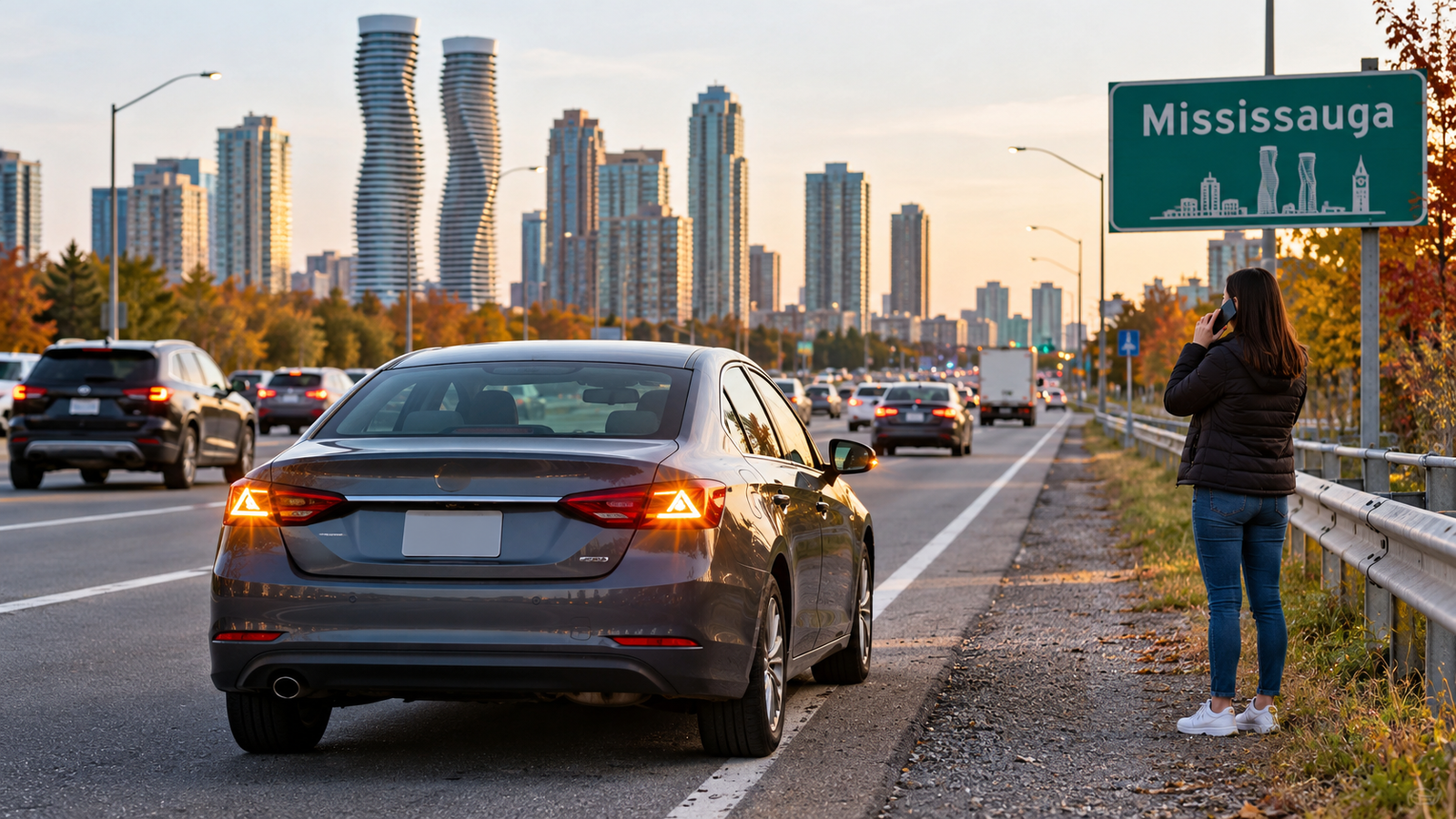
Car breakdowns on busy Mississauga routes such as Hurontario Street, Dundas Street or Highway 403 can turn a normal commute into an unpleasant one. Whether you’re a new driver or an experienced one, knowing what to do can help prevent accidents and keep everyone safe.
Mechanical breakdowns can happen at any time but you can help by staying calm and following safety precautions. Mississauga drivers should know how to cope with roadside breakdowns.
1. Remain Calm and Identify Red Flags
1. First, stay calm and do not make any sudden movements. Sudden panic or braking can increase the chances of an accident especially if there is lot of traffic.
Some common automobile hazard signs are:
- Engine Overheating or Smoke in Your Vehicle.
- Strange noises, vibrations or burning smells.
- Dashboard Warning Lights
- Engine stopped unexpectedly.
- Tire or steering problems.
If you see these signs, slow down and look for a safe place to pull over. If the car gets hard to handle, don’t drive.
2. Lock Up Your Car
If you can, try to stay out of active traffic.
Mississauga: Pull Over Safely
If you have car trouble on Eglinton Avenue, Burnhamthorpe Road or Hurontario Street, signal before stopping and check your mirrors.
Avoid a parking lot, side street or roadside site with traffic. Do not stop near crossroads, pedestrian crossings and sharp bends if possible.
What To Do If Your Car Breaks Down on the 401, 403 or QEW?
Highway breakdowns demand extra care in driving speeds.
Turn on your hazard lights and slow down to a safe shoulder.
Don’t try to push your car across lanes of traffic. If your vehicle is stuck in traffic call 911 and follow the instructions.
3. Turn on your hazard lights and make your car visible
Hazard lights tell other drivers that your car is stopped or having problems.
Use them when there is an issue. Visibility is particularly important at nite or in case of heavy rain, fog or snow.
Only place reflective warning triangles or safety cones if you can do so safely. Do not set up warning devices on highway traffic.
4. Stay In Your Car Or Leave It
Knowing when to stay in your vehicle can prevent serious injury.
If your car is safely on the shoulder of a highway waiting for assistance, the Ontario Ministry of Transportation recommends locking your car doors.
Different situations call for different responses. If there is a fire, smoke or collision you might have to get to a safer place.
If possible, exclude a non-traffic entrance. Do not allow children or other passengers to enter moving vehicles.
5. Call Roadside Assistance or Emergency Services
After securing your vehicle, identify what assistance you need.
| When to dial 911? | How to Call for Mississauga Roadside Assistance |
| Call 911 when: Someone is injured and needs urgent care.Fire in your car.Your car is blocking a busy lane of highway and cannot be moved to safety.Drivers are in imminent danger. | For non-emergency breakdowns, contact CAA, your insurance company’s roadside assistance, or an approved towing company. Provide your location , nearest junction or highway exit , direction of travel and details about your car trouble . |
Note: Sections of Highways 401, 403 and the QEW have been designated as prohibited towing zones. If you are safely stopped in one of those zones and need to be towed, dial 511 and select the Tow Zone Program option. authorized roadside assistance companies might also respond to certain qualifying conditions.
6. Don’t Make Roadside Breakdown Mistakes
Drivers may make unsafe decisions because they want to get the job done.
Don’t make these mistakes:
- Trying mechanical repairs with fast moving traffic.
- Immediately behind or in front of a disabled vehicle.
- Pushing a car that’s stuck through traffic.
- Opening your hood near traffic on a highway.
- Driving a broken down or over-heated car.
- going for a tow without checking out the provider.
A small highway shoulder can be a dangerous place to change a flat tire. Professional roadside help is usually safer.
7. Know your towing rights in Ontario
Ontario’s towing restrictions safeguard motorists.
Unless restricted towing zone laws or official orders are in effect, drivers can choose their towing company and location.
Pre-towing:
- Verify certification of towing company.
- Ask about towing costs.
- Read the permission form carefully.
- Confirm destination.
- Copy paper and invoices.
Never sign a blank consent to tow.
See the Ontario government’s official guide to your rights when being towed at https://www.ontario.ca/page/know-your-rights-when-getting-towed.
8. Be Ready for Mississauga Winter Breakdowns
Winter traffic hazards increase in Mississauga.
Dangerous are roadside breakdowns on snow-covered highways, freezing rain, slick shoulders, and limited visibility.
Emergency kit should include warm clothes, blankets, flashlight, charged power bank, water and first aid.
Be sure to check road conditions and weather forecasts before traveling in severe winter weather.
If you get stuck in the cold weather, save your phone battery and call for help. If the exhaust pipe is blocked with snow, do not start the engine as carbon monoxide can build up inside the vehicle.
9. Avoid Unexpected Car Breakdowns
You can’t prevent all mechanical failures, but regular maintenance can go a long way to preventing avoidable ones.
Service Your Cars Regularly
Check engine oil, coolant, tires, brakes and batteries.
Follow the service schedule recommended by the manufacturer, and check right away for any unusual noises or warning lights.
Check your car before long journeys
Check your tires, gas, windshield washer fluid and emergency gear before driving on Ontario’s major highways.
Charge your phone and get road side help information.
10. Emergency Preparedness is Vital for New Drivers
Inexperienced drivers may find unexpected mechanical problems difficult as they have little experience of the stresses of the road.
Learning defensive driving helps new drivers to spot hazards, maintain control and make better decisions.
Professional driving lessons also teach how to stop safely, road awareness and driving responsibly.
If you are about to start driving independently, driving education from [The Driving Tutors] in Mississauga can help you feel more confident and encourage safer driving habits.
Frequently Asked Questions
What to do if my car breaks down while I am driving?
Stay calm, turn on your hazard lights and slowly pull your vehicle out of traffic.
Highway 401: Stay in my car?
Generally, if your vehicle is safely off the road and there is no immediate danger. Follow the directions of emergency responders.
Is it possible to call 911 for a car breakdown in Mississauga?
A breakdown can be an emergency if it leaves a car blocking a lane of a highway or puts others in danger.
Who do I call for roadside assistance?
Ask your roadside assistance provider, CAA, or a certified tow company. If you’ve gotten off the highway safely and you’re in a place where towing is illegal, call 511.
You cannot change a flat on highways in Ontario.
Only if the place is safe in reality. If the shoulder is narrow or busy, it’s safer to call roadside assistance.
What if my car breaks down in a snowstorm?
- Turn on your hazard lights.
- Find a safe place to stop.
- Call for help.
- Keep warm.
Can I pick my own towing company in Ontario?
Usually, yes. However, there are some requirements that apply to certain police-directed situations and restricted highway towing areas.
Conclusion: Be Prepared and Safety First
Having a car break down in the streets of Mississauga doesn’t have to be dangerous. Stay calm, pull over if you can, turn on your hazard lights and call the appropriate assistance service.
Good defensive driving habits, emergency preparedness and regular maintenance can reduce risks and help motorists respond with confidence.
Whether you’re a novice or an experienced driver, always remember that your personal safety should take precedence over repairing or recovering your vehicle.